
We will be covering the solution overview featured in the week 3 Marketing Cloud Personalization Bootcamp that is hosted and created by Jyothsna Bitra as part of the Phoenix Salesforce Marketer Group.
For more information on the Phoenix Salesforce Marketer Group please follow this link to sign up: https://trailblazercommunitygroups.com/salesforce-marketer-group-marketing-cloud-phoenix-united-states/
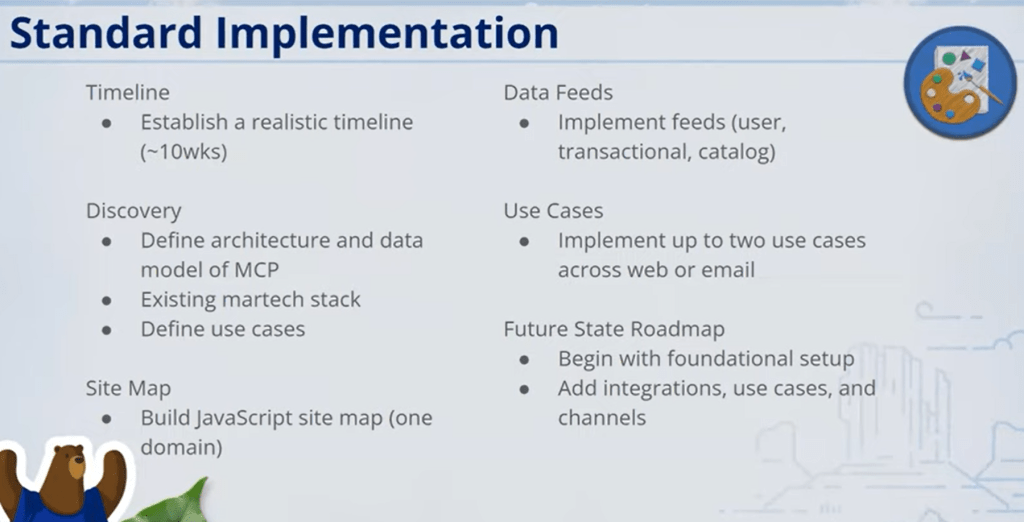
Standard Implementation
The typical implementation contains one domain with up to two use cases across one to two channels.
A realistic timeline is about 10 weeks start to finish and don’t shortcut the discovery part of the implementation as short cuts in this area can lead to rework later on down the road.
Don’t forget building out a future state roadmap that builds on the use cases, channels and other additions methodically. Marketing Cloud Personalization isn’t a set it and forget it type of functionality.
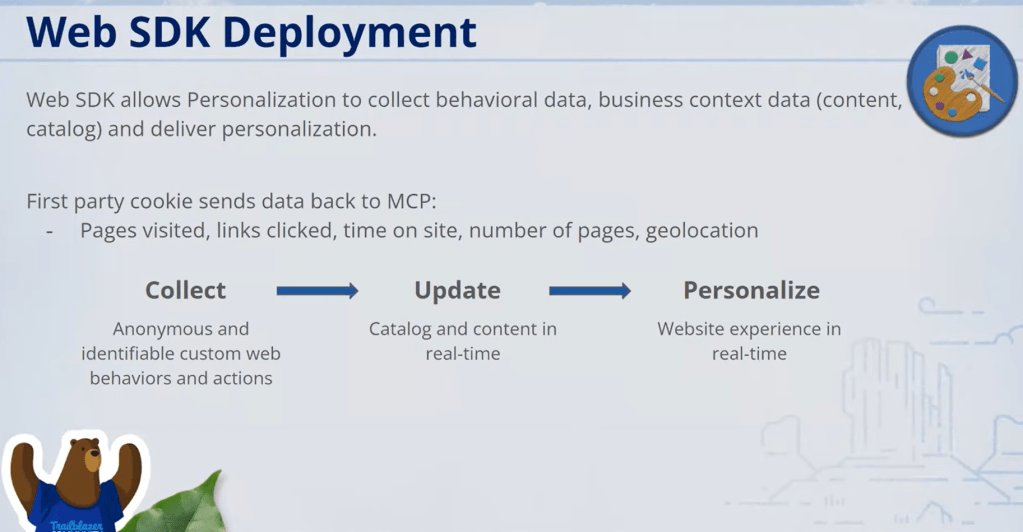
Web SDK Deployment
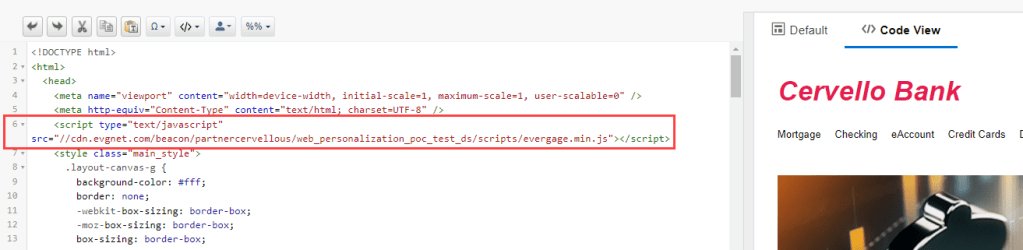
Here’s an example of the Integration code:
<script type=”text/javascript” src=”//cdn.evgnet.com/beacon/partnercervellous/web_personalization_poc_test_ds/scripts/evergage.min.js”>
Here’s an example of placing the code at the top of the web page:
Unified Customer Profile
The focus of the Unified Customer Profile is to detail how each subscriber is moving from an anonymous to a known state.
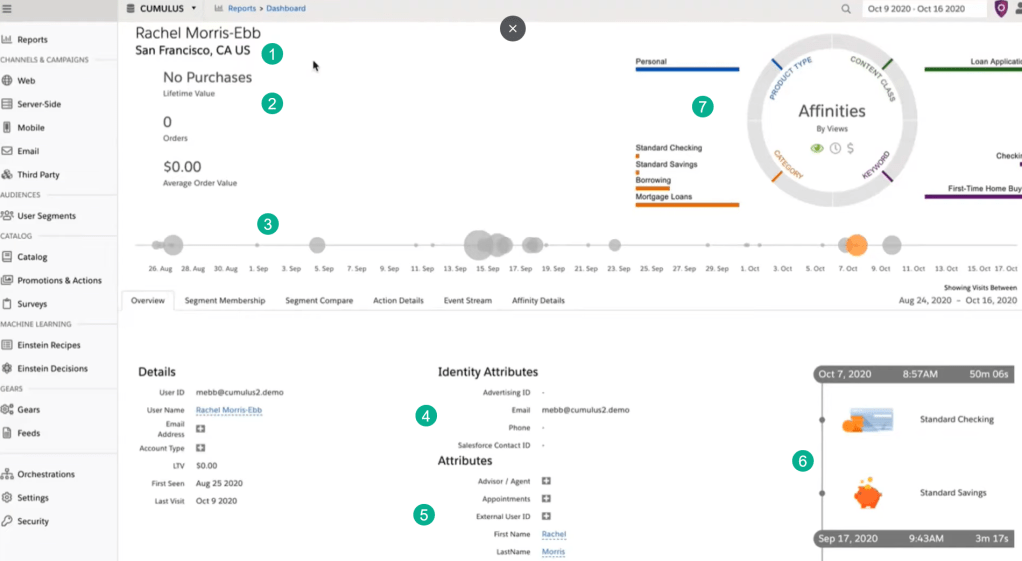
(1) High level demographic data
(2) Conversion data
(3) Digital interactions timeline – when the customer interacted with the brand
(4) Identity Attributes – the standard fields associated with each subscriber
(5) Attributes – additional custom attributes to further segment each subcriber
(6) Pages visited – highlights what pages the subscriber has visited.
(7) Affinities – summaries the characteristics of the subscriber to utilize in segmentation
All this data fuels the segmentation and customization of content.
Catalog best practices
Actionable – it should be content or products that can drive action. A hot selling sku or some valuable content like a white paper or article.
Scalable – it should be able to handle higher volumes of traffic and growth as the MCP implementation goes from Crawl/Walk to Run/Fly.
Available – it should be available in all channels, not siloed to a specific channel.
Relevant – it should be closely aligned to the business objectives and KPIs.
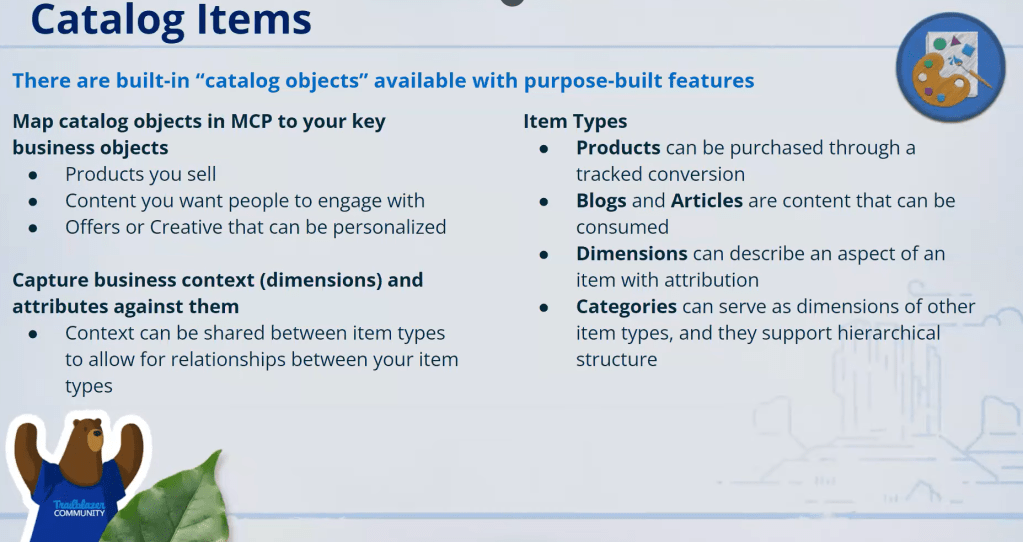
Remember Dimensions are items as well that can be referenced in AI recommendations.
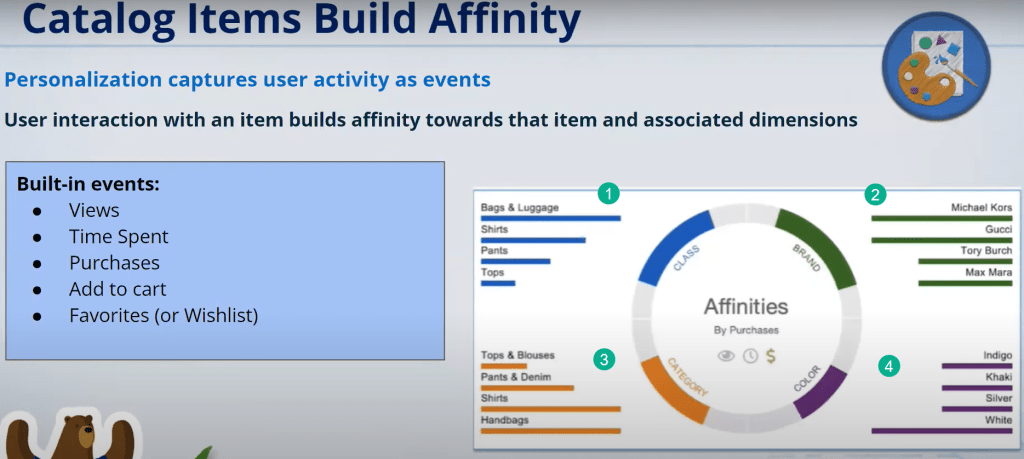
Catalog items build affinity. 1-4 are dimensions based on the catalog items. This subscriber has a higher affinity toward Michael Kors Bags(2) & Luggage(1) in White(4) in the Handbag Category (3).
Here’s an example of comparing a product based catalog item versus a content based catalog item.
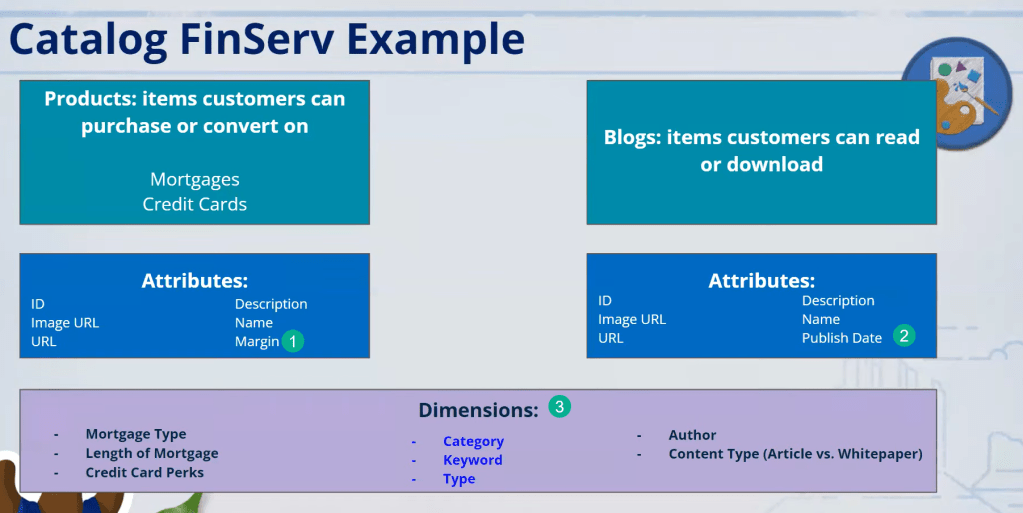
(1) In the product based catalog item attributes like Margin or price or color would be used to differentiate different catalog items
(2) In the content based catalog items attributes like published date or author or content category might be used to determine different content.
(3) Dimensions can be used across product and content catalog types. For instance on the product side the dimension of “Mortgage Type” applies to products only. Same on the Content side where “Author” only applies to content. But Category, Keyword and Type applies to both catalog types.
Matching Example Scenarios
Here’s a helpful overview of when users are matched and not matched.
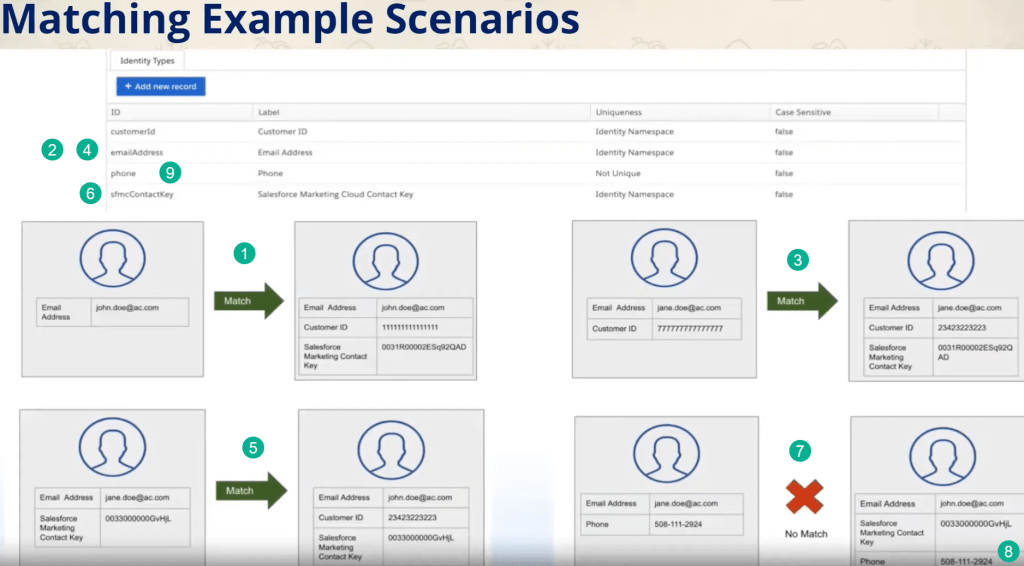
(1) Scenario #1 there is a matching email address and since Email Address is an Identify Namespace (2) the match is successful.
(3) Scenario #2 there is a matching email address but not a matching Customer ID. The match is made due to the email address (4) and the original Customer ID is kept.
(5) Scenario #3 the email doesn’t match but the Marketing Cloud Contact Key does match. The match is made and the original email address is maintained because the Contact Key (6) is an Identity Namespace.
(7) In our last scenario the email doesn’t match but the phone does match. This is not a match because the phone (8) is not an Identity Namespace(9).
Enjoy the rest of the video and look out for future posts on Marketing Cloud Personalization.
 handsonsfmc.com
Leave a comment